Launch offer — valid today only

📄 Digital book in PDF · read it on your phone or print it

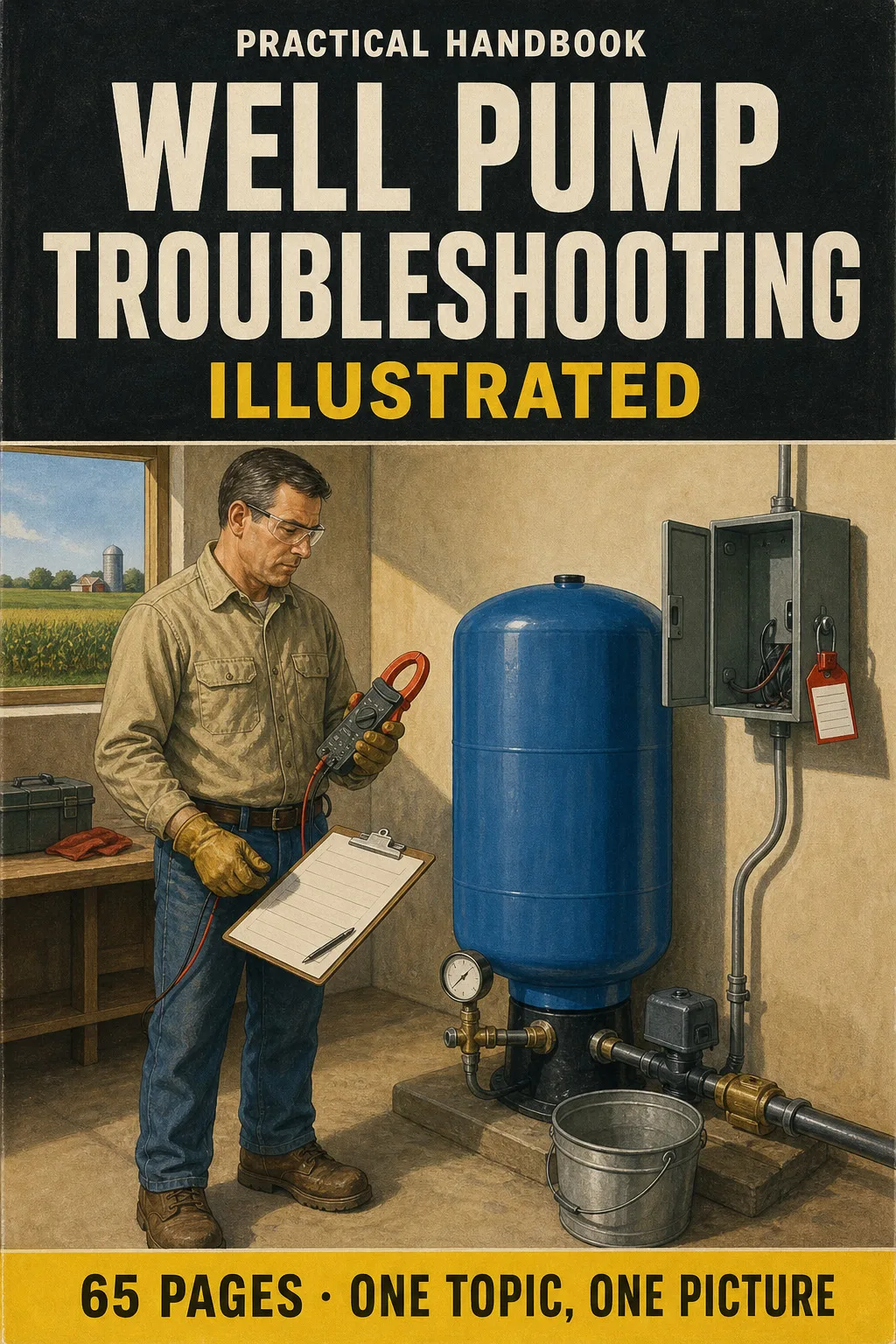
Well Pump Troubleshooting in Drawings From Dry Faucet to the Cause, Same 4 Steps

No water, low pressure, short cycling, the pressure switch, tank precharge, the control box, the bucket test and amp and ohm readings. Each topic gets its own page: the drawing first, then what you need to remember. 65 illustrated pages.

START TROUBLESHOOTING THIS WAY

🔒 Secure checkout · PDF by email · 30-day guarantee

Every topic, its own pageEvery symptom drawn as a decision tree, with the explanation right next to it
65 illustrated pages9 parts, from how a well system works to when to call a pro
Up-to-date sourcesManufacturer instructions, the NEC and EPA/CDC private well guidance
PDF by emailFormat

Look Inside the Book

Every page has one big drawing and a box with the psi, amps, ohms and steps you need to know:

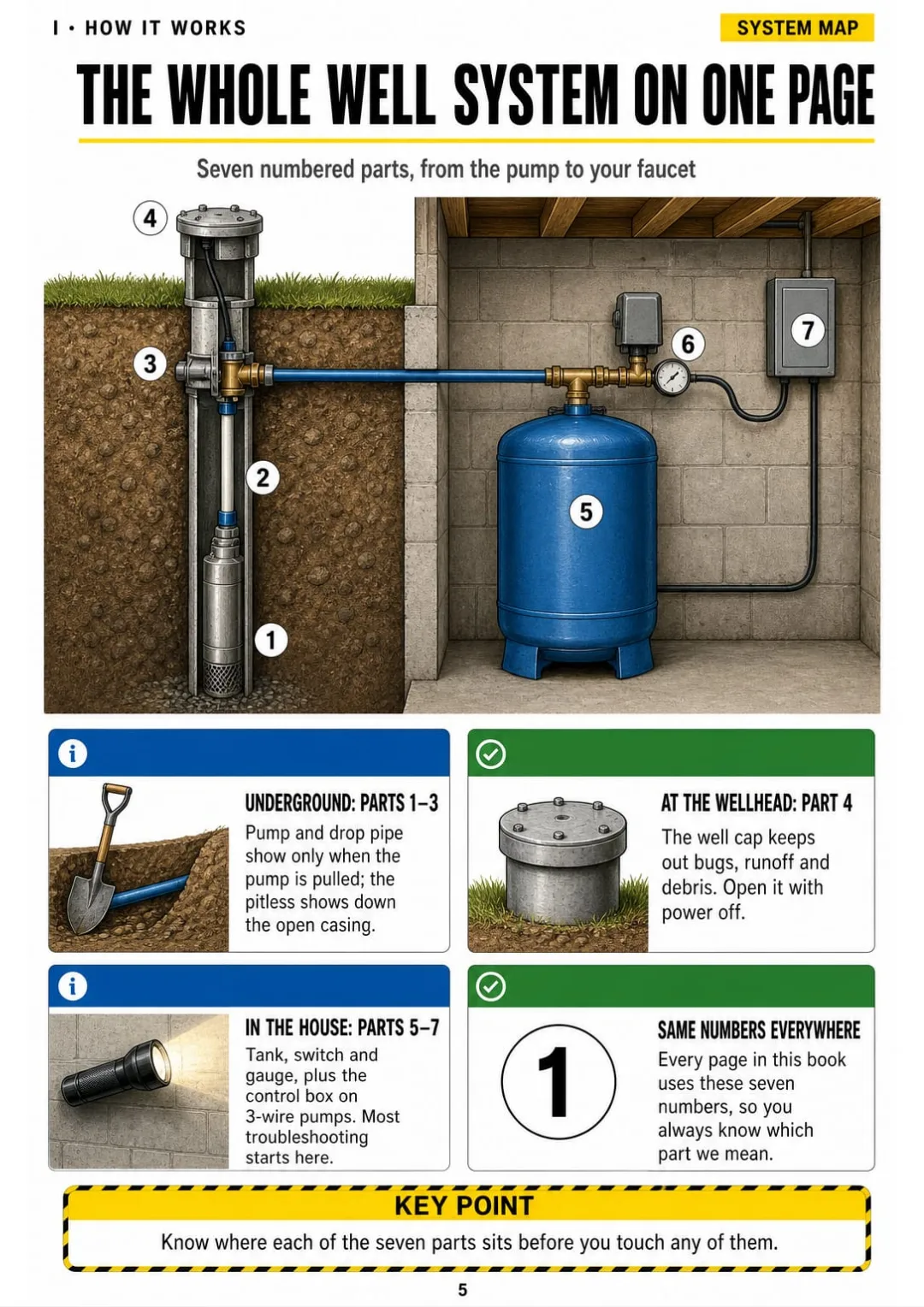
Pump to faucet in one cutaway: 7 numbered parts used across the whole book
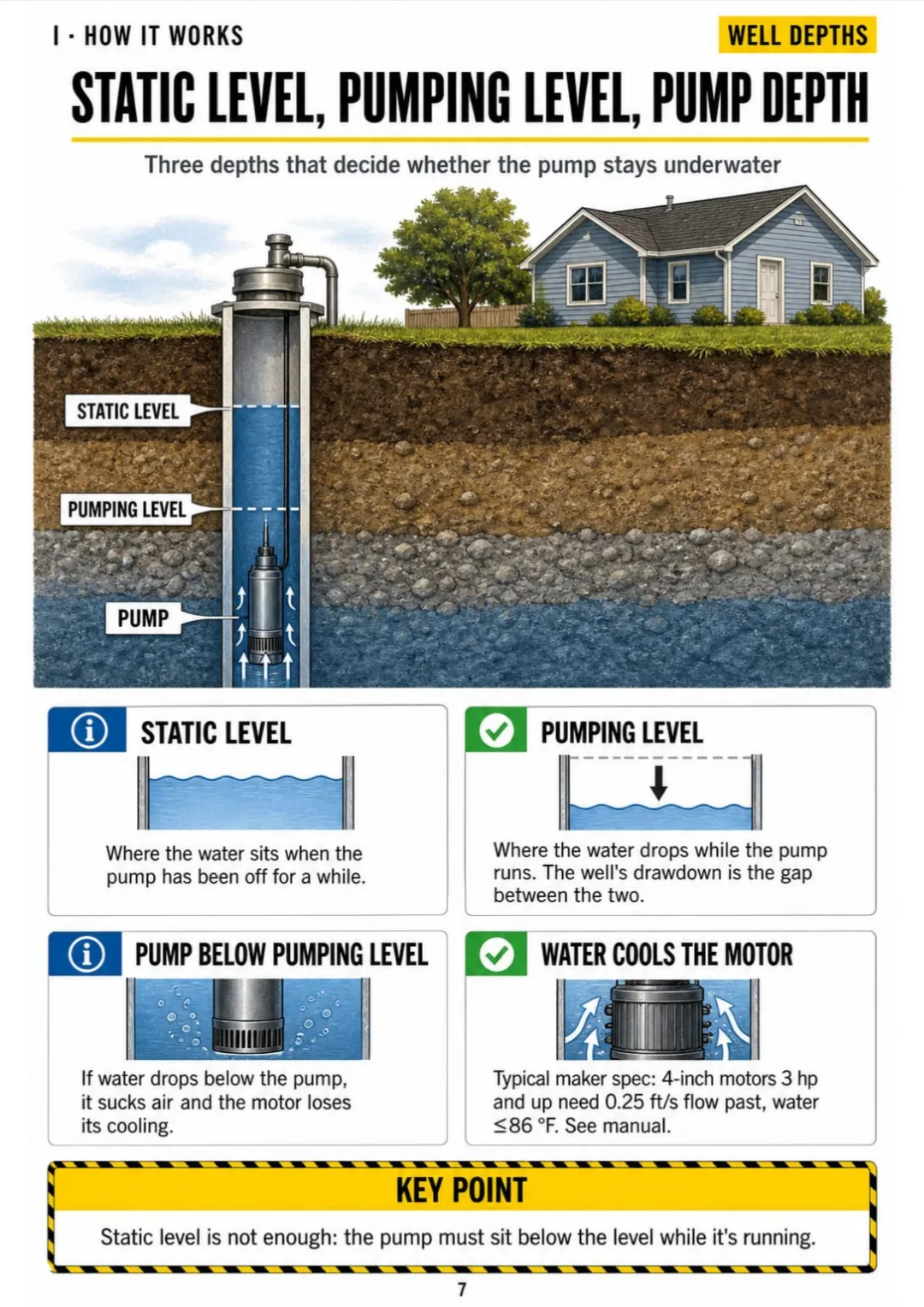
Static level, pumping level and pump depth: the pump always sits below the pumping level
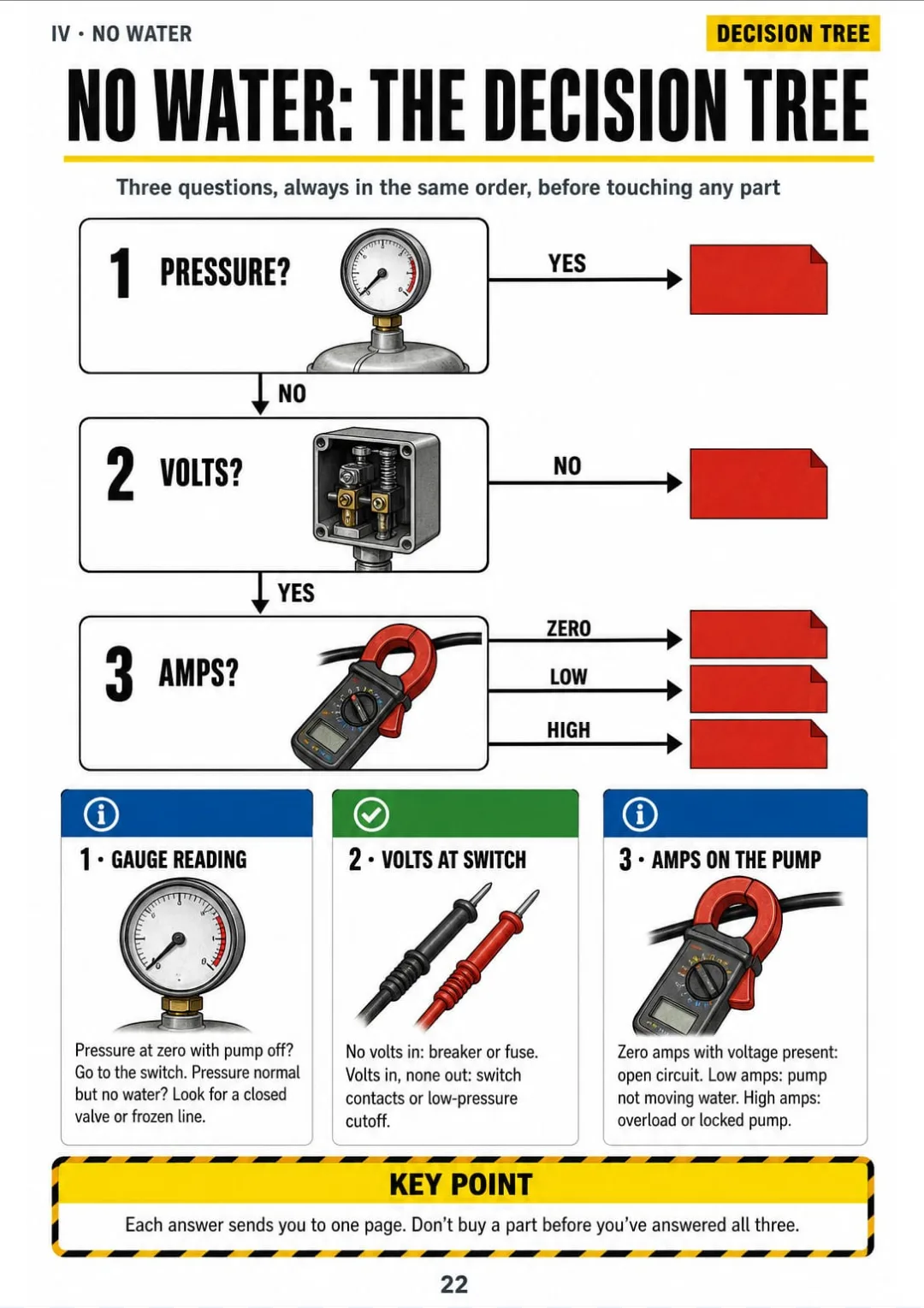
Pressure → volts → amps: the three-question tree for a well with no water
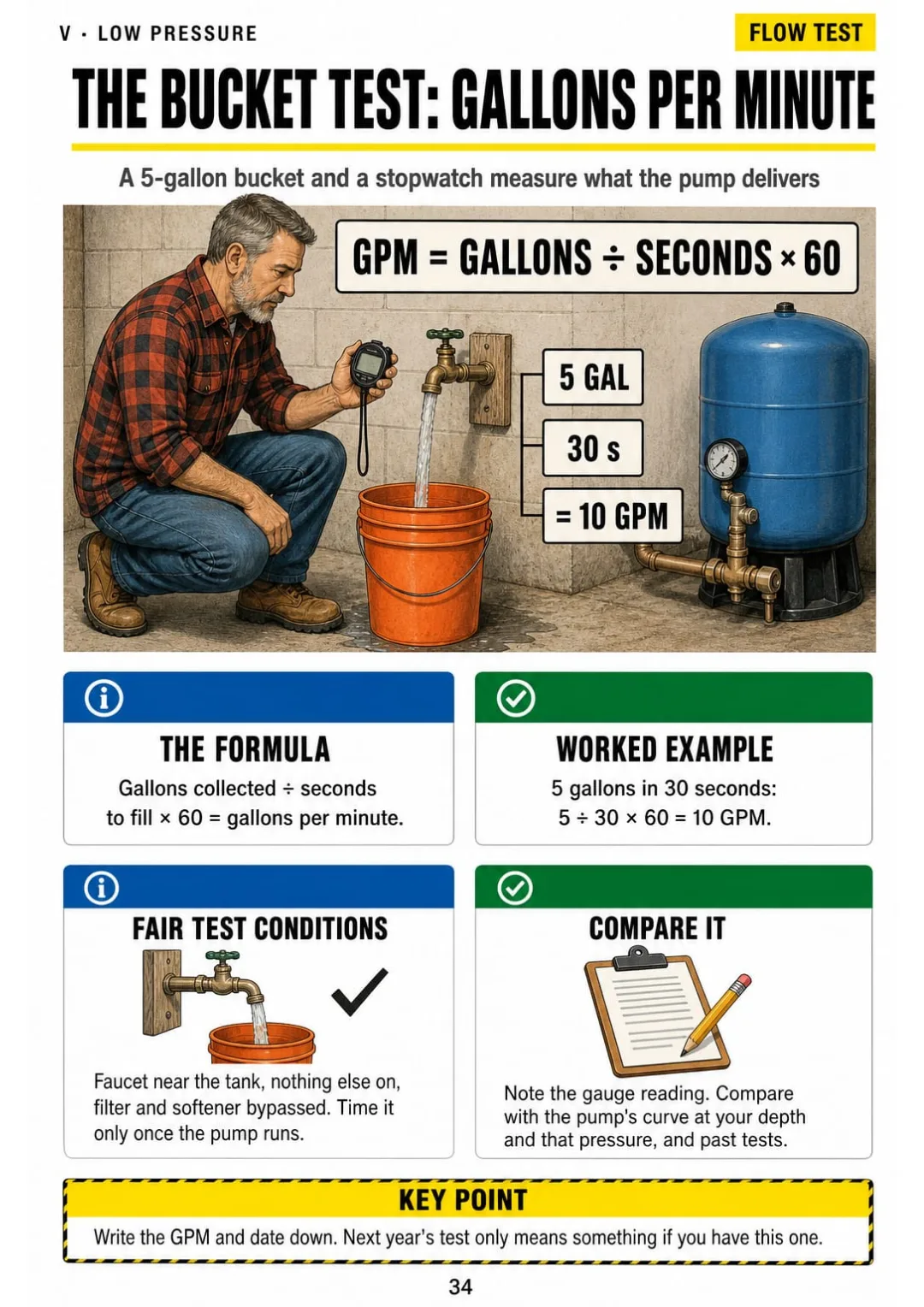
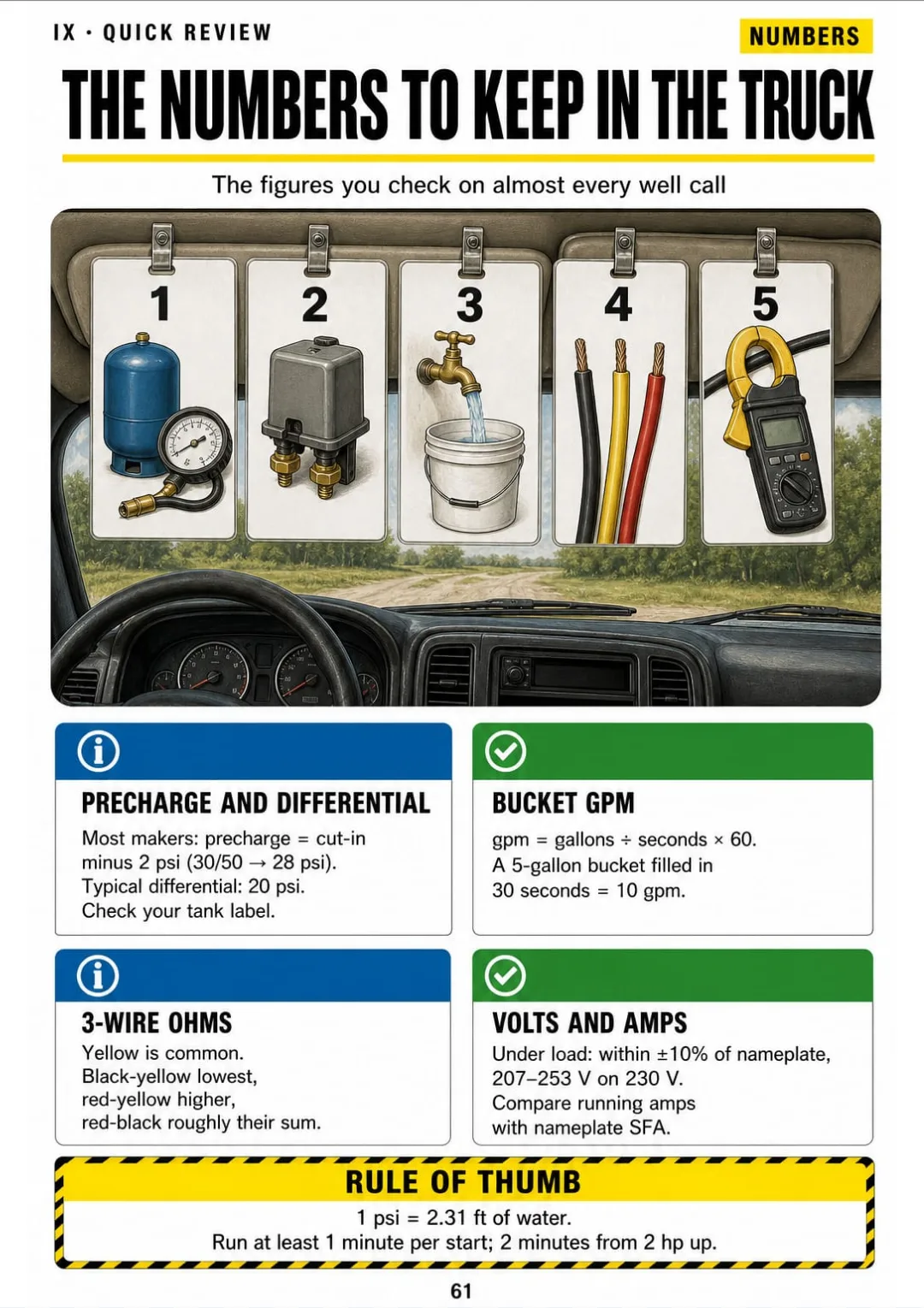
GPM = gallons ÷ seconds × 60. 5 gal in 30 s = 10 GPM.
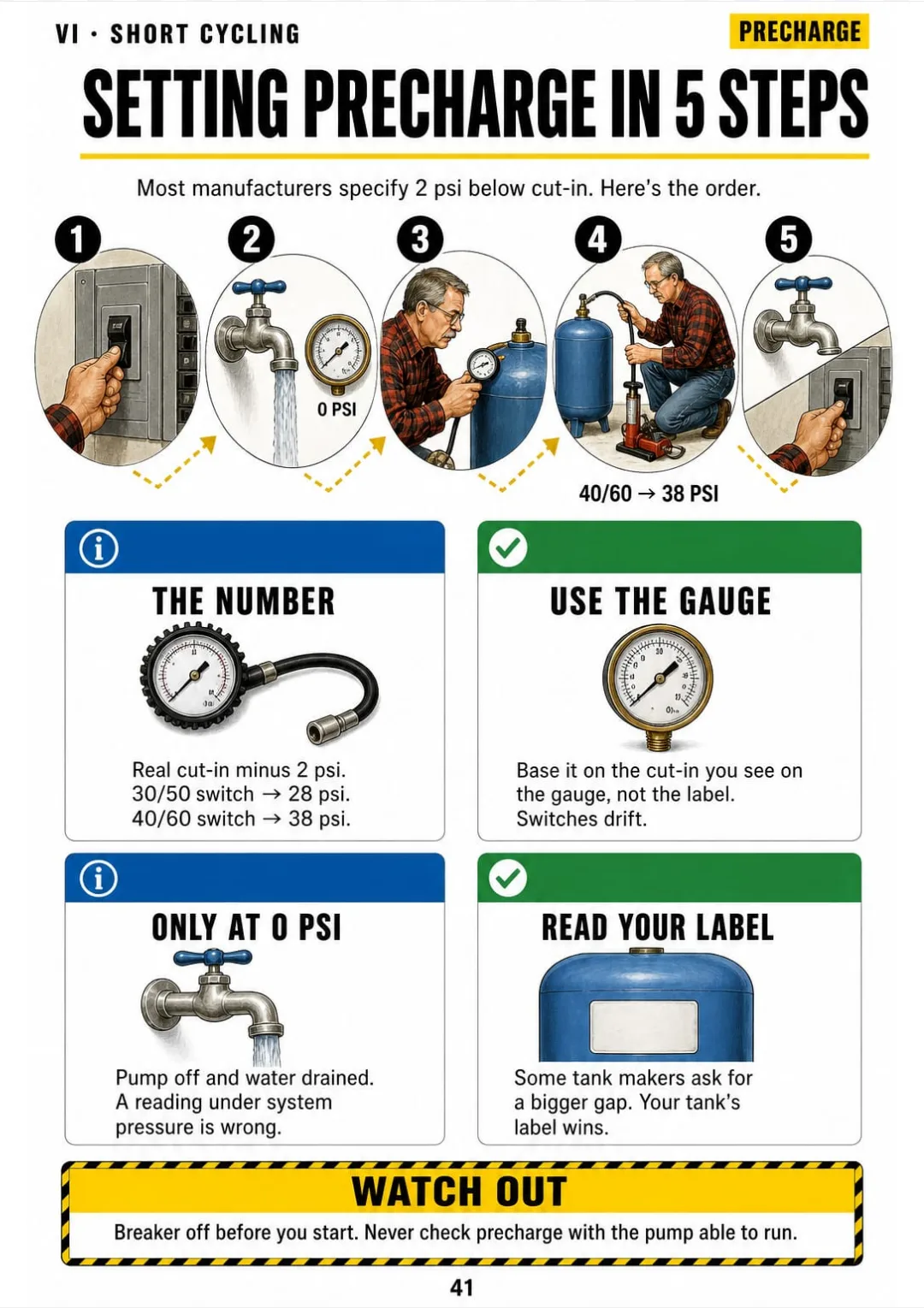
40/60 switch → 38 psi precharge, measured at 0 psi with the power off
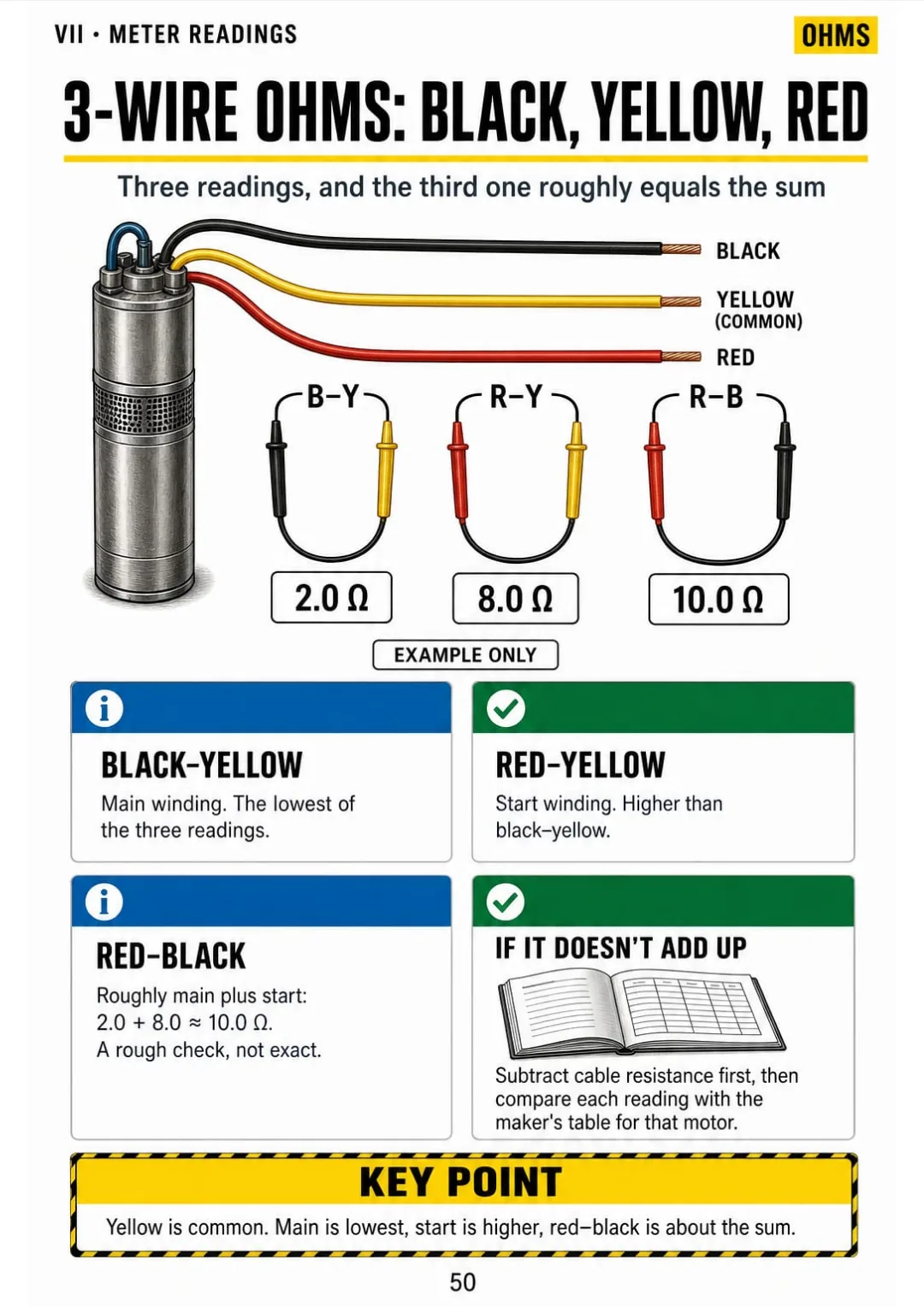
B–Y lowest, R–Y higher, R–B ≈ the sum of both
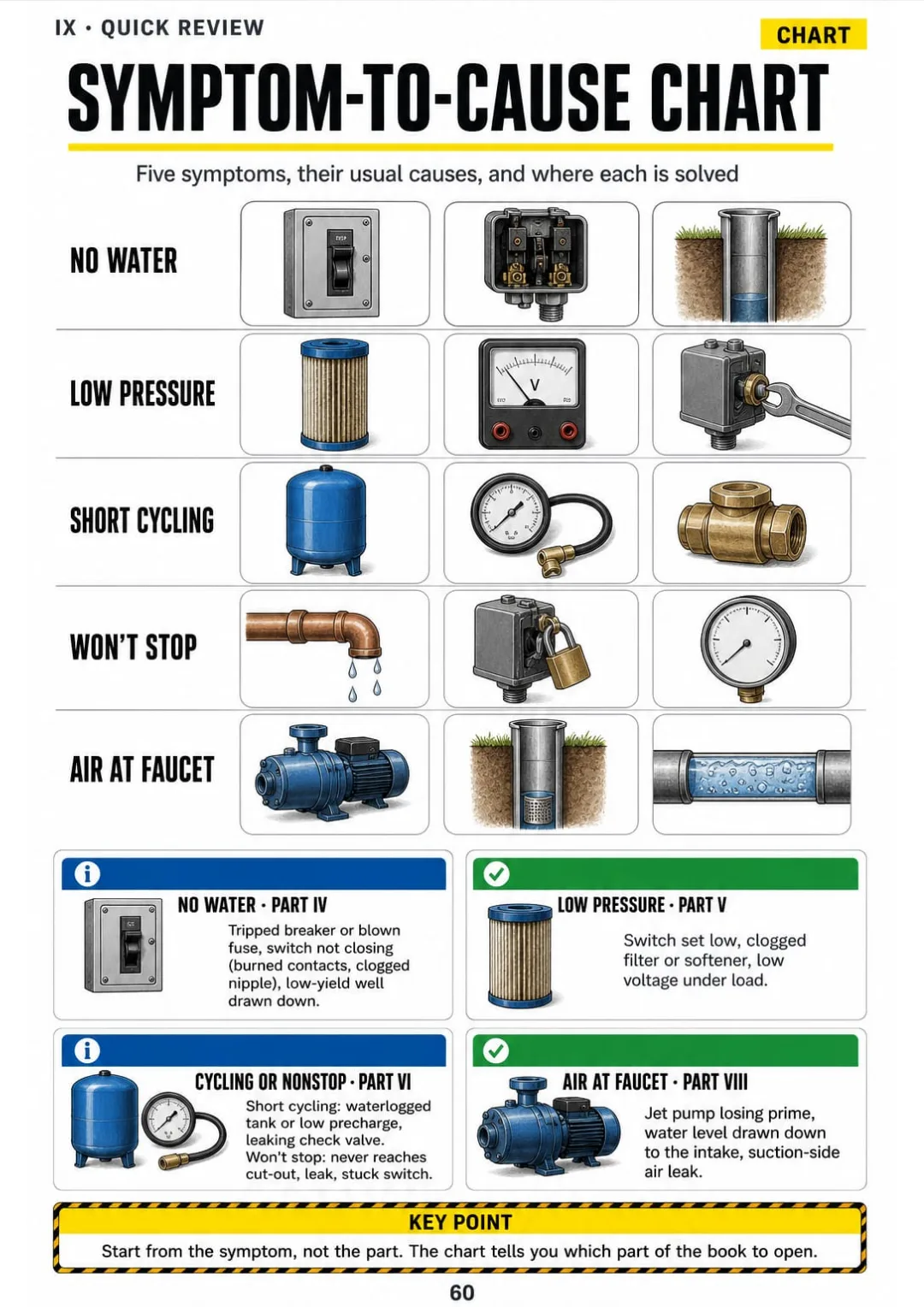
5 symptoms × 3 frequent causes each, all on one page
Cut-in − 2 psi, 20 psi differential, gpm formula, 3-wire ohms, amps vs SFA

Swipe to see more →

These are real pages from the book. The table of contents is the full one: 9 parts and 61 topics.

The Problem Isn't You. It's How It Was Explained to You.

You're standing in a basement next to the pressure tank. The faucets upstairs are dry, and the homeowner is waiting for an answer.

You know the parts. But the manual covers "no water" in six paragraphs that jump from the breaker to well yield and back again. So you start guessing, and guessing means swapping parts.

Pressure → volts → amps: the three-question tree for a well with no water

In the book, "no water" is one page: a tree with three questions. What does the gauge read? Are there volts at the switch? What do the amps say? Each answer sends you down one branch.

Short cycling, low pressure, the bucket test, setting precharge and 3-wire ohm readings work the same way. Each one gets its own page.

You go from the dry faucet to the cause, in order, and you make the call without flipping back through the manual.

COMPARE FOR YOURSELF

Same Topic, Two Ways to Learn It

THIS
  • The manual: line after line of text
  • Water levels and pump depth explained only in words
  • You show up to the call still unsure
The static water level is defined as the vertical distance from the ground surface to the water surface in the well when no water is being withdrawn. Once the pump operates, drawdown occurs and the water surface declines to the pumping level, the magnitude of which depends on the pumping rate and the transmissivity of the formation. The pump intake must be installed sufficiently below the pumping level to maintain submergence, while remaining an adequate distance above the bottom of the well to limit sediment entry.
FOR THIS
  • Static level, pumping level and pump depth in one drawing
  • The key numbers in one box
  • You see it and it clicks
Static level, pumping level and pump depth: the pump always sits below the pumping level
CONTENTS

Take a Look at the 9 Parts and 61 Topics

How the system works, safety and tools, the 4-step method, no water, low pressure, short cycling, meter readings, jet pumps and water clues, and a quick review: 65 pages, all illustrated

IHow a Well System Works · pp. 5-11
  1. The Whole System on One Page
  2. Submersible, 2-Wire, 3-Wire or Jet Pump?
  3. Static Level, Pumping Level, Pump Depth
  4. How the Pressure Switch Thinks
  5. What the Pressure Tank Really Does
  6. Precharge: The Number Everyone Forgets
  7. Check Valve, Foot Valve and Why Water Stays Up
IISafety and Tools First · pp. 12-16
  1. 240 Volts at the Pressure Switch
  2. The Capacitor Still Bites
  3. The Five Tools on the Truck
  4. Reading Your Gauge Right
  5. Opening the Well Cap Without Contaminating It
IIIThe 4-Step Method · pp. 17-21
  1. Look, Listen, Measure, Then Decide
  2. Step 1: Look
  3. Step 2: Listen
  4. Step 3: Measure
  5. Step 4: Decide (and When to Stop)
IVSymptom: No Water at All · pp. 22-30
  1. No Water: The Decision Tree
  2. Breaker Tripped or Fuse Blown
  3. Gauge at Zero, Switch Contacts Open
  4. Burned or Pitted Switch Contacts
  5. Clogged Switch Nipple
  6. Control Box Problems on a 3-Wire Pump
  7. Pump Runs, No Water Comes Up
  8. The Well Ran Out: Low-Yield Wells
  9. Frozen Line or Pitless in Winter
VSymptom: Low Pressure, Weak Flow · pp. 31-37
  1. Low Pressure: The Decision Tree
  2. Is It the Switch Setting?
  3. Clogged Filter or Softener
  4. The Bucket Test: Gallons per Minute
  5. Pump Never Reaches Cut-Out
  6. Pressure Drops With No Water in Use
  7. Low Voltage Makes Weak Pumps
VISymptom: Short Cycling, Pump Won't Stop · pp. 38-45
  1. Short Cycling: The Decision Tree
  2. The Tap Test on the Tank
  3. Air Valve Spits Water
  4. Checking and Setting Precharge Step by Step
  5. Drawdown and Minimum Run Time
  6. Check Valve Leaking Back
  7. Pump Runs Nonstop
  8. Water Hammer When the Pump Stops
VIIMeter Readings: Volts, Amps, Ohms · pp. 46-54
  1. Reading the Motor Nameplate
  2. Voltage Under Load
  3. Amps: High, Low or Zero
  4. Ohms on a 2-Wire Pump
  5. Ohms on a 3-Wire Pump: Black, Yellow, Red
  6. Zero or Infinite Ohms
  7. Insulation to Ground
  8. Testing the Capacitor and Relay
  9. Worked Case: Three Readings, One Answer
VIIIJet Pumps and Water Clues · pp. 55-59
  1. Shallow vs. Deep Well Jet
  2. Losing Prime
  3. Air Spurting From the Faucet
  4. Sand, Silt and Cloudy Water
  5. After a Lightning Storm
IXQuick Review and When to Call a Pro · pp. 60-65
  1. Symptom-to-Cause Chart
  2. The Numbers to Keep in the Truck
  3. Before You Swap a Part
  4. Most Frequent Mistakes on a Well System
  5. When It's Pulling-Pump Work
  6. Notes for the Pro You Call

One Page, One Topic, All Clear

Think of it this way:

The pump kicks on, runs three seconds, shuts off, then kicks on again. The homeowner asks whether it's the tank or the pump, and you need an answer before you pull anything.

You open the short-cycling page and the decision tree is drawn right there: tap the tank, check the air valve, then measure precharge with the power off and the tank drained.

40/60 switch → 38 psi precharge, measured at 0 psi with the power off

No water, low pressure, the bucket test, 3-wire ohm readings and a check valve leaking back work the same way: each one sits on its own page.

Well Pump Troubleshooting Illustrated is 9 parts and 61 topics, all drawn. It ends with a symptom-to-cause chart and the numbers to keep in the truck.

What you see drawn, you don't have to memorize.

What's Inside Well Pump Troubleshooting Illustrated:

Ipp. 5-11

How a Well System Works

The whole system on one page, submersible 2-wire, 3-wire or jet pump, water levels, how the pressure switch and the tank work, precharge and check valves.

IIpp. 12-16

Safety and Tools First

240 volts at the switch, the capacitor that still bites, the five tools on the truck, reading your gauge and opening the well cap cleanly.

IIIpp. 17-21

The 4-Step Method

Look, listen, measure, then decide: the same 4 steps for every symptom, and when to stop.

IVpp. 22-30

Symptom: No Water at All

The no-water decision tree, breakers, switch contacts, a clogged switch nipple, 3-wire control boxes, low-yield wells and frozen lines.

Vpp. 31-37

Symptom: Low Pressure, Weak Flow

The low-pressure tree, switch settings, clogged filters, the bucket test in gallons per minute, a pump that never reaches cut-out, and low voltage.

VIpp. 38-45

Symptom: Short Cycling, Pump Won't Stop

The short-cycling tree, the tap test, an air valve that spits water, setting precharge step by step, drawdown, check valves and water hammer.

VIIpp. 46-54

Meter Readings: Volts, Amps, Ohms

The motor nameplate, voltage under load, high, low or zero amps, 2-wire and 3-wire ohms, insulation to ground, the capacitor and relay, and a worked case.

VIIIpp. 55-59

Jet Pumps and Water Clues

Shallow vs. deep well jets, losing prime, air spurting from the faucet, sand and cloudy water, and what to check after a lightning storm.

IXpp. 60-65

Quick Review and When to Call a Pro

The symptom-to-cause chart, the numbers to keep in the truck, what to check before you swap a part, the most frequent mistakes, and when it's pulling-pump work.

At the end of the book: A symptom-to-cause chart, the numbers to keep in the truck and a worked meter-reading case.


Plus: 2 Free Books

Well Troubleshooting Case Workbook

BONUS 1: «Well Troubleshooting Case Workbook»

Value on its own: US$ 17.90

Real-world symptom cases with gauge and meter readings to work through, so you practice the look-listen-measure-decide order before you're standing at the pressure tank.

Well Pump Mistakes, Before & After

BONUS 2: «Well Pump Mistakes, Before & After»

Value on its own: US$ 14.90

The most common mistakes on a well system (wrong tank precharge, a switch set by guesswork, a skipped check valve) drawn side by side with the right way, for a quick review.

Well Pump Troubleshooting Illustrated with 2 Free Books

  • Well Pump Troubleshooting Illustrated: 65 illustrated pagesUS$ 63
  • BONUS 1: Well Troubleshooting Case WorkbookUS$ 17.90
  • BONUS 2: Well Pump Mistakes, Before & AfterUS$ 14.90
  • High-resolution PDF to printIncluded
Total value US$ 95.80
YOUR PRICE:
US$ 27
You save US$ 68.80
YES, I WANT WELL PUMP TROUBLESHOOTING ILLUSTRATED FOR US$ 27

📄 This is a digital PDF book sent to your email: nothing is printed or shipped.

Secure purchaseEncrypted payment30-day guarantee

PDF by email: We email you Well Pump Troubleshooting Illustrated as a PDF, together with the two free books. It's a single payment: no installments, no extra charges.

Who This Book Is For

You're taking more well calls

You're taking more well calls

You're a plumber, and wells weren't where you started. Every symptom has its own page with a decision tree, so you go to a call with an order to follow, not a guess.

You're training a new helper

You're training a new helper

Your new guy won't read a manufacturer's manual cover to cover. He'll follow a drawn tree from the breaker down to the pump, and the 4 steps are the same every time.

You live on a private well

You live on a private well

You've already paid for two service calls. Now you can read the gauge, run the bucket test and check the tank precharge, and you'll know when it's a job for a pro.

Everything You Get Today

US$ 95.80US$ 27
YES, I WANT WELL PUMP TROUBLESHOOTING ILLUSTRATED FOR US$ 27

📄 This is a digital PDF book sent to your email: nothing is printed or shipped.

30DAYS
GUARANTEE

30-Day Guarantee

Try Well Pump Troubleshooting Illustrated for 30 days, bonus books included.

We refund everything if the file won't open, if the book isn't what you see here, if you were charged twice or if the email doesn't arrive. Just email us.

You pay once. No subscriptions.

Frequently Asked Questions

Is it for me if I'm a plumber taking more well calls, or a homeowner on a private well?

Yes. It covers submersible 2-wire and 3-wire pumps and shallow and deep-well jet pumps on a pressure switch and tank. Part 1 covers the basics in a few pages. The rest is decision trees, amp and ohm readings, a worked meter case and the numbers page: what you already know, in one order your helper can follow. Variable-speed constant-pressure drives follow their own manufacturer's manual.

Where does the content come from?

From manufacturer installation and maintenance instructions for pumps, motors, tanks and pressure switches, motor nameplate data, the NEC for electrical safety, and EPA and CDC private well guidance. Every setting is marked to check against your manufacturer's instructions and the nameplate.

Is this official material?

No. It's an independent illustrated book. It isn't affiliated with or endorsed by any manufacturer or organization.

Does it replace hands-on training or a licensed pro?

No. It's a study and reference book. Electrical work and pulling a pump are jobs for qualified people, using lockout/tagout and following your local code.

Are the practice cases real exam questions?

No. The cases in the workbook were written for this book. They don't come from any exam or certification.

When and how do I get it?

PDF by email, sent to the address you enter at checkout. The book and the 2 bonus books are included.

Do I have to pay every month?

No. It's a one-time payment.

Can I have it on paper?

Yes. It's a PDF you can print and keep in the truck, by the pressure tank or wherever you need it.

How does the refund work?

You have 30 days. We refund everything if the file won't open, if the book isn't what you see on this page, if you were charged twice or if the email doesn't arrive: just email us.

Before You Close This Page

No more rereading without it sticking.

Short cycling, precharge and 3-wire ohms: you see them drawn, and that's it.

You show up to the call knowing where everything is.

Drawings make studying faster.

The book is right below.

One-time payment: US$ 27 · Guarantee: 30 days · PDF by email

YES, I WANT WELL PUMP TROUBLESHOOTING ILLUSTRATED FOR US$ 27

📄 This is a digital PDF book sent to your email: nothing is printed or shipped.